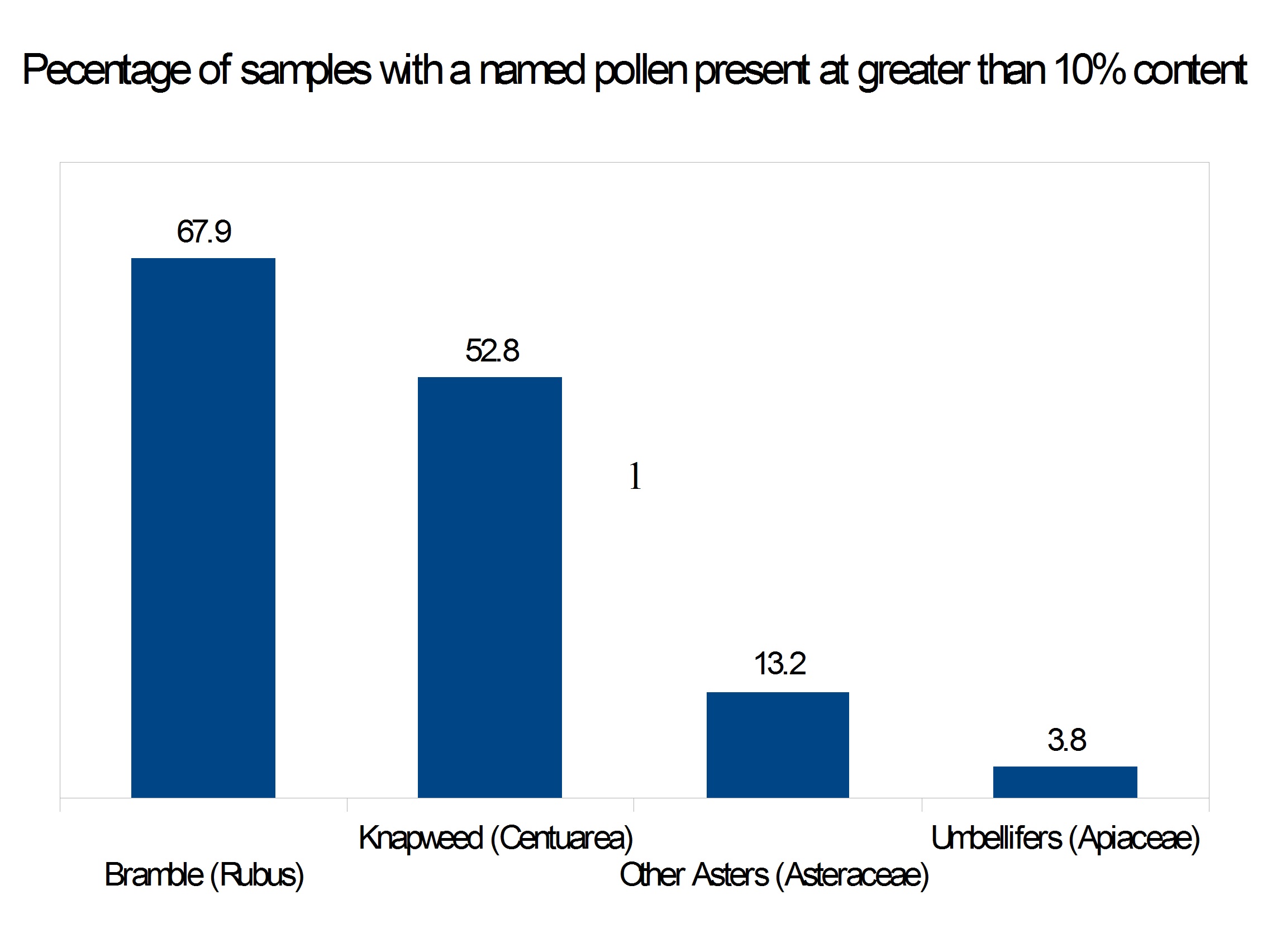
Comprehensive surveys by Kernow Ecology and pollen analysis by Dr. Judy Webb suggests that Knapweed (Centaurea) is a defining conservation requirement for Buff-banded Mining Bee (Andrena simillima). The bee has a relatively high population density which may link to a requirement for dense stands of abundant (at least 450 flowers) of Knapweed (Centaurea) close to nest sites (within 900m). Scrub edge or ruderal habitat rich with Bramble are also important, but unlikely to be limiting as generally increasing in Cornwall.
Field observations and analysis of pollen loads showed that the Buff-banded Mining Bee Andrena simillima F. Smith in Cornwall collected most of its pollen from knapweed Centaurea nigra (Asteraceae) and bramble Rubus fruticosus agg. (Rosaceae). Whilst A. simillima does not fit a simple binary definition of dietary specialism it qualifies in Cornwall as a specialist bee (or eclectic oligolege), taking pollen mainly from two unrelated plant genera. Potential drivers of this flower specialisation are reviewed.
Buff-banded Mining Bee (Andrena simillima) uses sparsely vegetated banks and compacted bare ground for nest sites. The species nested in aggregations, or solitarily in fairly close proximity to other aggregations, suggesting reasonable sized areas of bare ground may be required. Usually not restrictive on coastal sites, but potentially restrictive on some sites and particularly inland ones.
Buff-banded Mining Bee (Andrena simillima) is associated with late flowering maritime grassland the distribution suggests it could be linked to an Atlantic climatic niche (further nest research is needed).
Buff-banded Mining Bee (Andrena simillima) is a Red Data Book (Falk 1991) bee found in scattered sites in England (Else & Edwards 2018). There is a clear decline in other European countries and the bee is listed in the Red data books of Czech, Germany and the Netherlands. Cornwall is one of the UK "Hot-spots" for this species with approximately 14 modern sites (ERICA 2020).
Warncke (1988) considers the various taxa within the group to be confined to different geographical regions; Andrena s. simillima has an Atlantic distribution with recent records mainly in SW England and Western France. The U.K. population is considered to be A. s. simillima which is the nominate form described from England (Woods, per comm. 2020) so is referred to as Andrena simillima in the 2023 publication.
The best pragmatic advice for this species is conserve late flowering grassland rich in Knapweed, which will also be beneficial to a rich range of other bee species.
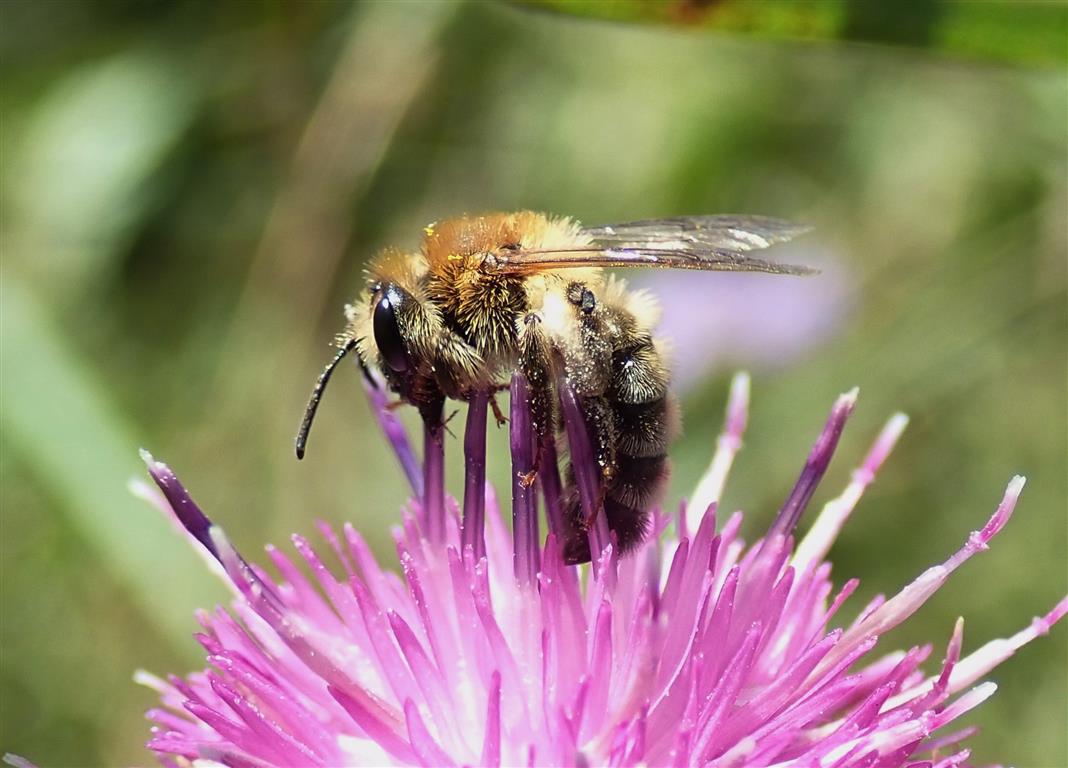
Buff-banded Mining Bee (Andrena simillima)
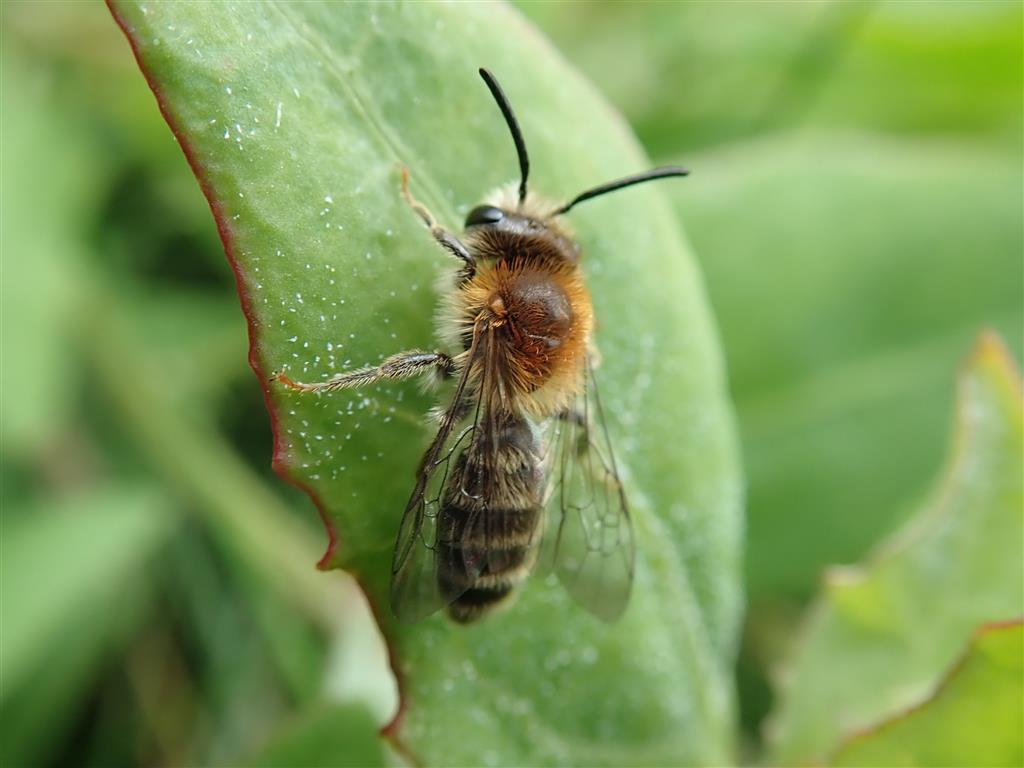
Male Buff-banded Mining Bee
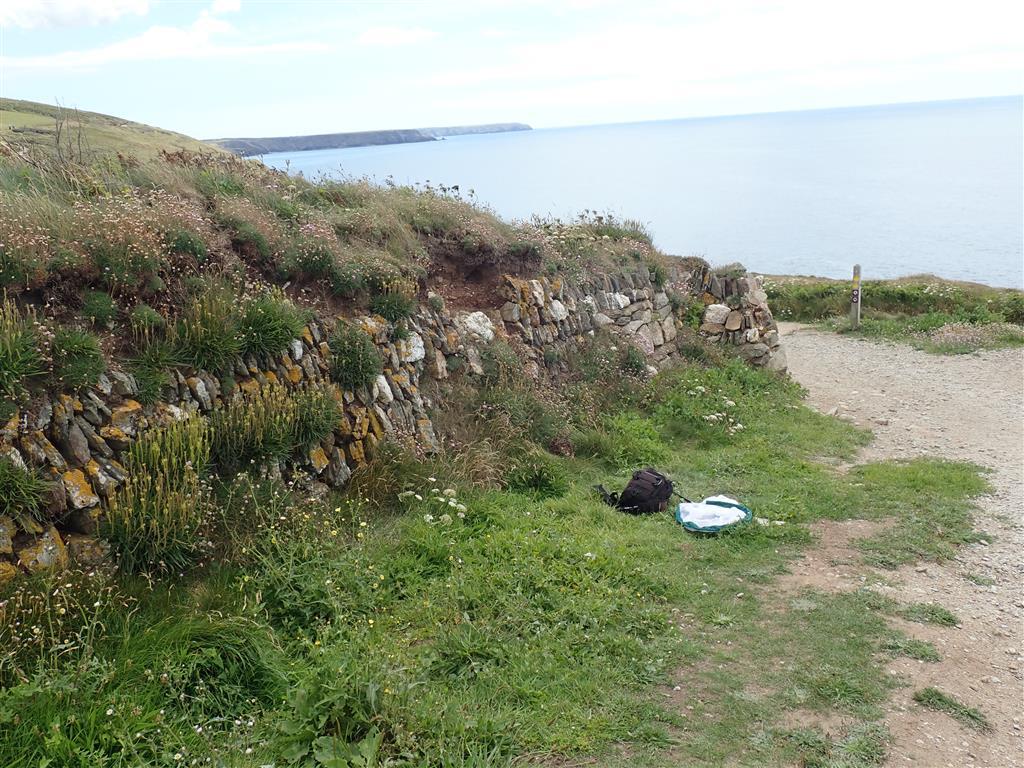
Nest site
Conserve/manage unimproved coastal grassland or any flower-rich areas with Knapweed (Centaurea).
Dense stands of abundant (at least 450 flowers) of Knapweed (Centaurea) are most important within 700m of nest sites.
Conserve/manage ruderal habitats rich in Asteraceae including Thistles (Circium) and Ragwort (Senecio).
Conserve scrub edge habitats. Although not when they are encroaching on more valuable aster-rich grassland habitats.
Implement late (after mid august) cutting or grazing regimes.
Conserve bare ground features.
Link
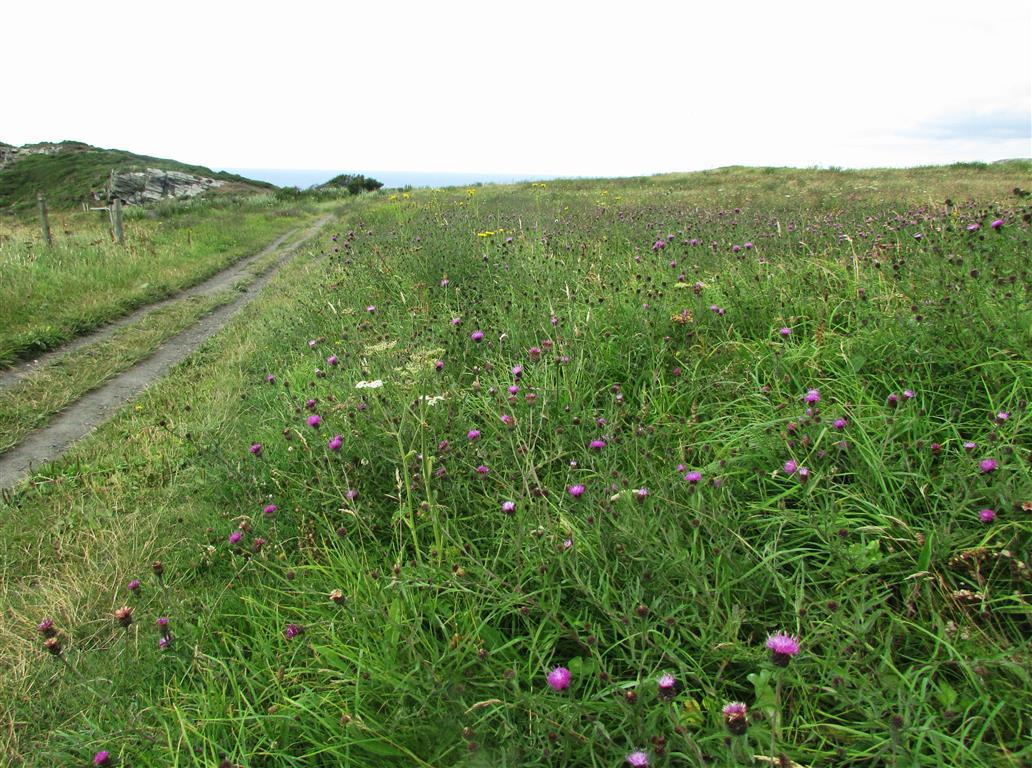
Knapweed used by the bee
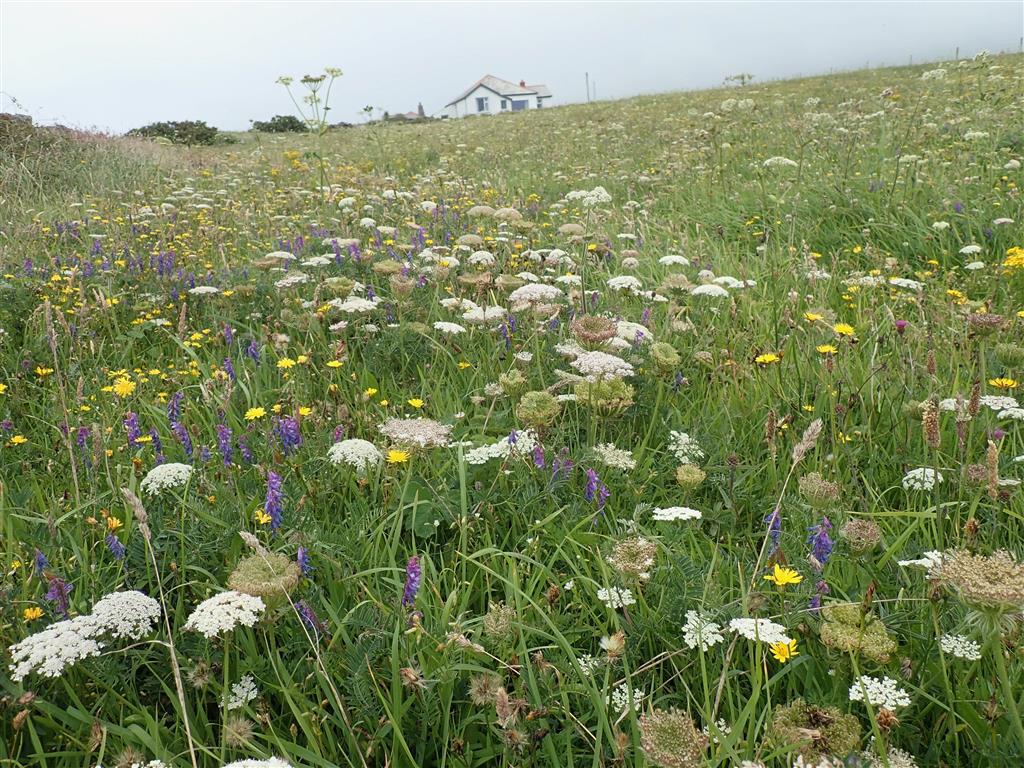
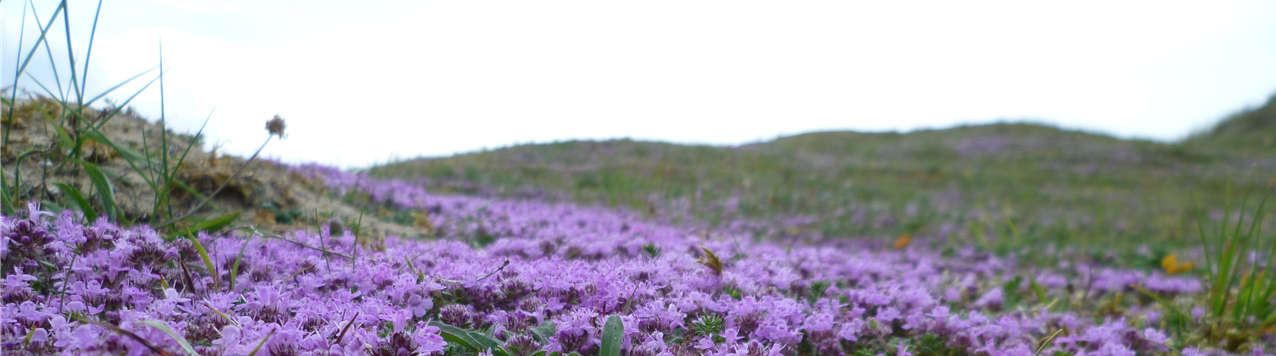
The bee was found in very rich coastal meadow sites but only used a limited range of available flowers