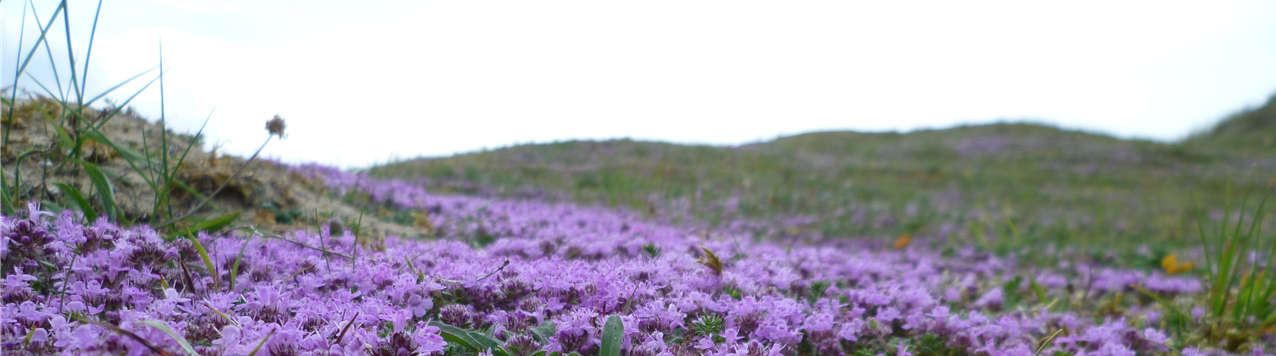
The full 2023 document available below reviews grassland management research and provides management recommendations for flower visiting insects on the North Cornwall Coast. The North Cornwall coast is of key importance for various bee species because of the landscape scale connected late flowering grassland habitats.
There can be conflicts between the restoration of flowers and the needs of butterflies and grasshoppers, as the former requires high summer biomass removal and the latter need undisturbed areas. But leaving grassland totally unmanaged should not be the alternative as butterflies also need a lot of flowers, and grasshoppers need short habitats.
Cutting and grazing are both useful approaches for maintaining species-rich grassland for both flowers and bees. Hay meadow regimes are a proven culturally important way of delivering a very high density and abundance of flowers. Cutting has some advantages in that site owners can have a lot of flexibility in when and how much to manage. But grazing is also an extremely important management method for species-rich grasslands. Research emphasises a mix of site-specific management methods across the landscape is needed. There is agreement between the reviewed papers and my personal experience that autumn cutting and/or winter grazing is safest for invertebrates, but this may conflict with production of hay, weed control and/or nutrient stripping (which all often require earlier removal of biomass). Rotational management of some refuges can be used as a mitigation for such sites. Winter grazing alone can be a simple effective method for maintaining species-rich grasslands, but this may need some nutrient stripping first.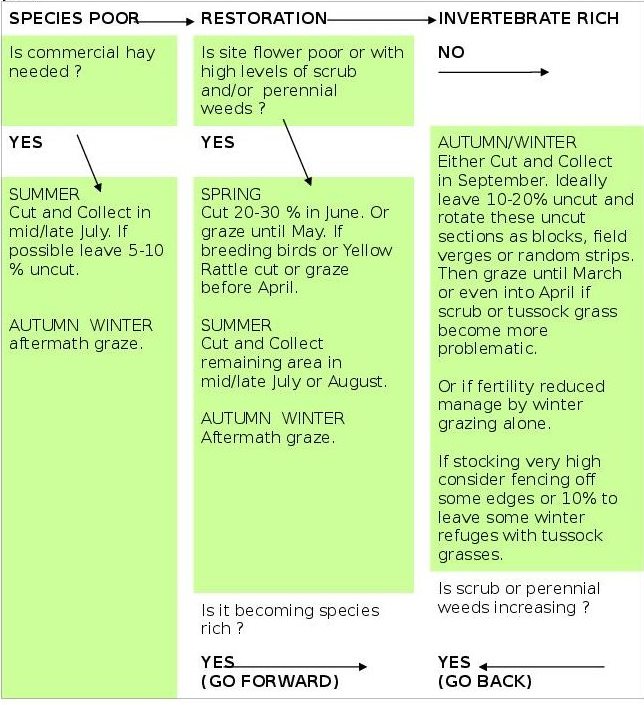
Restoration flowchart
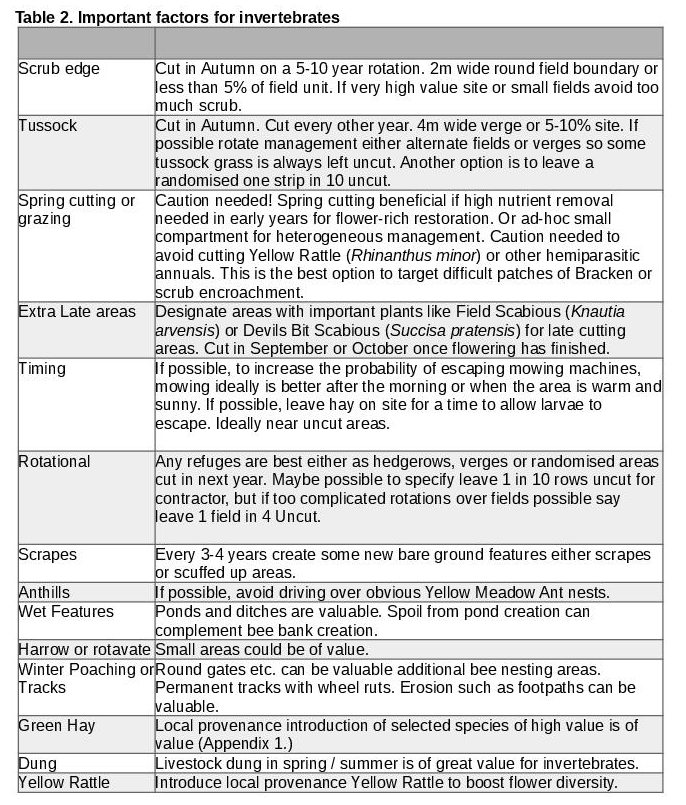
Important features for inverts